
Teach With The Breakerspace
We work with teaching teams across MIT to bring materials exploration into undergraduate courses.
- Best fit
- Courses where students need to connect material structure, composition, processing, or properties to experimental evidence.
- What we provide
- Instrument access, technical consultation, training, and help planning and teaching lab activities.
- What instructors provide
- Learning goals, course context, student preparation, and teaching staff participation.
- Start here
- Tell us the course number, enrollment, learning goal, likely timing, and activity you have in mind.
Teaching Formats
Exploration, Demonstration, Or Supervised Visit
A brief visit can combine orientation, live demonstrations, and supervised participation. It works well when students should encounter what an instrument makes visible or measurable without needing independent use later in the course.
Instrument Training For A Course Cohort
Students complete instrument training for the tools they will use in later assignments or projects, then reserve time to work independently.
Guided Lab Module
Students investigate a defined course question using prepared samples or workflows, producing measurements or an interpretation. A module may use one instrument or rotate small groups through several, combining evidence to show how different methods answer different parts of a materials question. It can include instrument training when students will need later independent access.
Project Support
Already-trained students can ask staff for help choosing feasible measurements, preparing samples, developing methods, and interpreting what their results can and cannot show. This model suits courses whose teams bring different materials, questions, and characterization needs.
Breakerspace-Centered Subject
Some subjects use the Breakerspace as a primary teaching environment over several weeks, with a course team that takes an active role in instrument training and supervision. Students can pursue sustained investigations and compare results across methods.
Planning A Collaboration
We can help choose instruments and samples for questions about surface structure, chemical composition, crystals and phases, mechanical behavior, or differences between measurement methods.
How We Work Together
Breakerspace staff can share instruction, lead a defined activity, or help a trained course team prepare to teach in the lab.
We are happy to provide instrument training and lab access to every member of your teaching team, including faculty, graduate students, teaching assistants, and teaching fellows. Arrange this in advance so they can prepare for the instruments and workflows they will support.
There are currently no charges for teaching activities. Consumables are covered by the lab’s operating budget.
Supervised And Independent Use
Guests, novices, and trainees may use instruments under the direct supervision of Breakerspace staff, course staff, or another person designated by Breakerspace staff. Every supervisor must be trained on the instrument. Other trained users may host observers but may not supervise instrument use.
Students need the relevant instrument training before working independently.
Timing And Capacity
- Contact us at least one to two weeks before a brief visit when possible. Plan designed modules, cohort training, repeated use, and larger engagements before the semester begins.
- Sessions work best with no more than five or six students at one instrument. Larger groups can rotate or use instruments in parallel, with one trained instructor assigned to each active instrument.
- Discuss unusual samples and any safety or compatibility questions in advance.
Reserving The Whole Lab
For coordinated or exclusive use of the lab, request a whole-lab reservation at least one week in advance. The reservation is confirmed only when the Breakerspace approves it in writing.
Established Course Models
3.000 Coffee Matters
3.000 Coffee Matters is a Breakerspace-centered subject for first-year students. Students brew, taste, measure, image, and analyze coffee while learning how structure, processing, and chemistry connect to the final cup.
Coffee is approachable but scientifically rich: students can taste a difference, change a brewing variable, collect data, and ask whether the measurement explains what they experienced. That model can extend to other safe, familiar materials to connect observation, measurement, and interpretation.
3.001 Exploration Sessions
3.001 has visited for one or two exploration sessions per semester over several years, introducing students to the lab and its instruments without a full course integration.
3.010 Guided XRD Exercise And Training
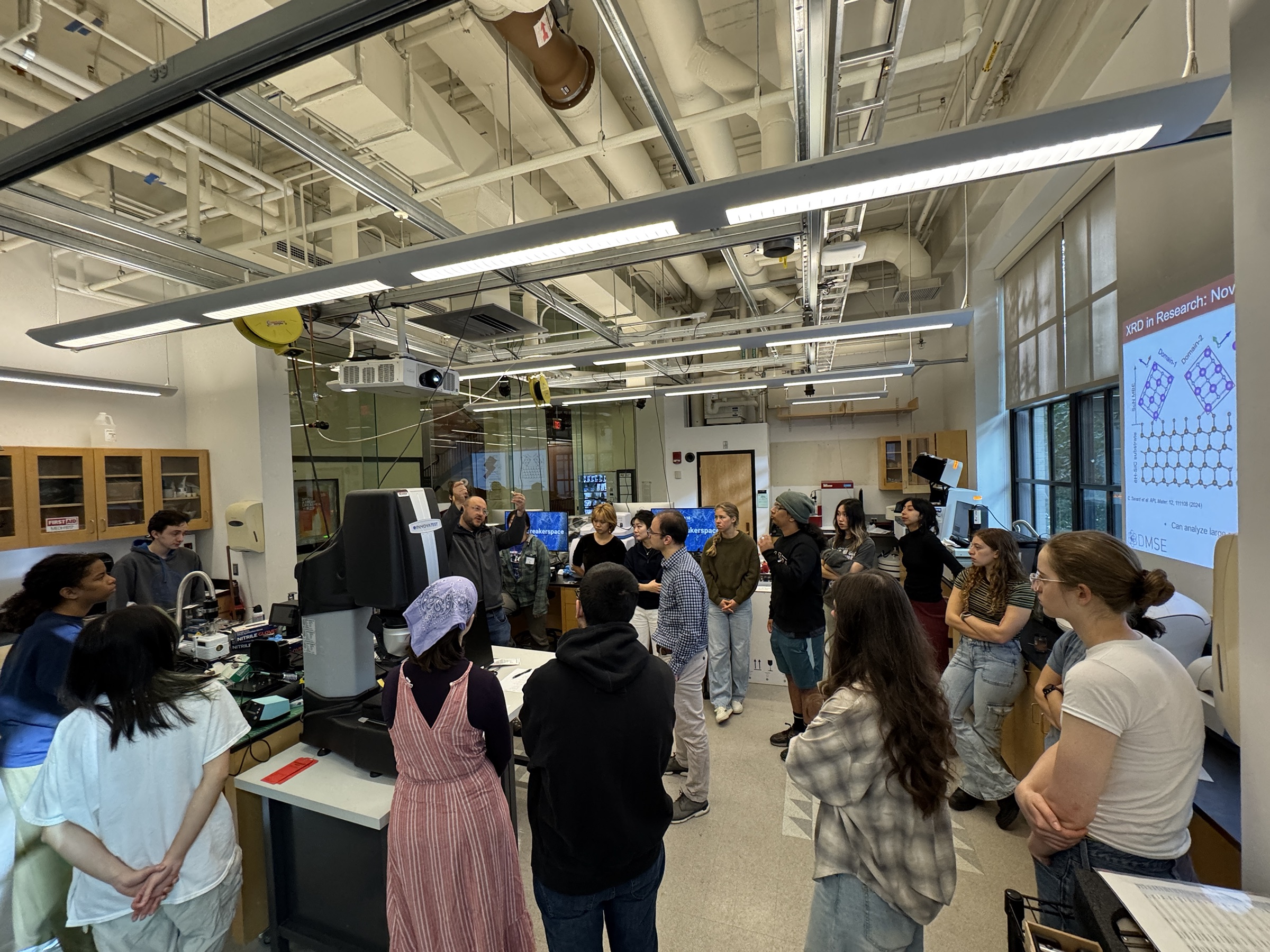
3.010 students take part in a course-integrated XRD exercise and instrument training in the Breakerspace. This guided-module model connects diffraction concepts from the subject to sample handling, measurement, and interpretation in the lab.
3.042 Project Support
3.042 capstone students use the lab extensively as their projects develop, ideally arriving already trained for independent use. Although the course has no formal lab engagement, staff help students develop the advanced characterization methods their projects need.
3.040 Instructor-Led Advanced Characterization
3.040 is an advanced characterization subject for DMSE majors centered in the Breakerspace. Its trained course team manages instrument training and supervision in coordination with the Breakerspace team, supporting sustained, specialized lab use.