Help & Support
Use this page when something is not working, you cannot access the lab or your files, or you need help choosing a safe and workable next step.
For fire, smoke, a serious injury, a major spill or release, or another immediate danger, follow the Breakerspace emergency instructions. Do not use Slack or email for an emergency.
Quick Links
| I need help with… | First action |
|---|---|
| An instrument warning, error, damaged part, spill, or unexpected behavior | Stop work and follow Instrument Problems. |
| Tap access, workstation login, Slack, Dropbox, or missing permissions | Go to Access And Account Problems. |
| Saving, locating, syncing, or transferring data | Go to Files And Data. |
| Choosing an instrument, preparing an unusual sample, developing a method, or interpreting results | Go to Project And Method Support. |
Instrument Problems
If an instrument behaves unexpectedly, displays an unfamiliar warning, makes an unusual sound, spills or leaks, damages a sample, or appears unsafe:
- Stop the procedure. Do not repeatedly clear the warning, restart the instrument, bypass a protection, or continue experimenting with controls.
- If it is safe and you know the normal procedure, leave the instrument in a stable condition. Keep other users from continuing until the problem has been assessed.
- Check the relevant instrument page for a documented common failure mode only when the situation is stable and the guide clearly describes the same problem. Stop if the safe next step is unclear.
- Find a Breakerspace staff member in the lab. If no one is available, ask in
#breakerspace-helpon Slack or email dmse-breakerspace@mit.edu. - Report the instrument, sample, settings, warning or symptoms, when the problem began, and any actions already taken.
Report damage, spills, unsafe conditions, injuries, and near misses even when the immediate problem appears resolved. Follow Problems, Damage, And Non-Emergency Incidents for lab-wide response and reporting guidance.
Access And Account Problems
The normal access process is part of the Breakerspace training pathway. Use this section when you completed the expected step but the resulting access, approval, or invitation is missing.
Tap Access
Physical tap access is processed by the lab manager after your one-time Qualtrics training record is complete. If you completed the record but cannot enter the lab, email dmse-breakerspace@mit.edu from your MIT email address with your name and the approximate date of your first training. Staff can normally identify your Kerberos account from your MIT email address; if you contact the team from a personal address, expect a request to follow up from your MIT address.
Lounge-only access is managed separately. Use the access information on the Breakerspace Lounge page.
Instrument Workstation Access
The instrument workstations are on the MIT WIN domain, with permissions managed through Moira group lists. After an instrument training, the trainer should add you to the relevant group, such as dmse-brkrspc-sem for the SEMs.
Log on to an instrument workstation using your own MIT Kerberos account. If you completed training but cannot log on, email dmse-breakerspace@mit.edu from your MIT email address and include the instrument, when you trained, and the exact error or behavior you encountered. Do not send passwords or authentication codes by email.
Slack And Dropbox Access
During training closeout, the trainer should send an invitation to your @mit.edu email address for the Breakerspace Slack workspace. Check your MIT email and spam or junk folder first. If the invitation is missing or expired, contact dmse-breakerspace@mit.edu.
Dropbox access uses a self-service request because Breakerspace staff cannot add you to the team until an MIT Dropbox for Business account exists:
- Create or confirm your MIT Dropbox for Business account through the MIT Dropbox landing page.
- While logged in with that MIT account, visit Dropbox Teams, find “DMSE Breakerspace,” and request to join.
- Breakerspace staff will approve the membership request. If you cannot find the team or a submitted request remains unresolved, contact dmse-breakerspace@mit.edu.
Files And Data
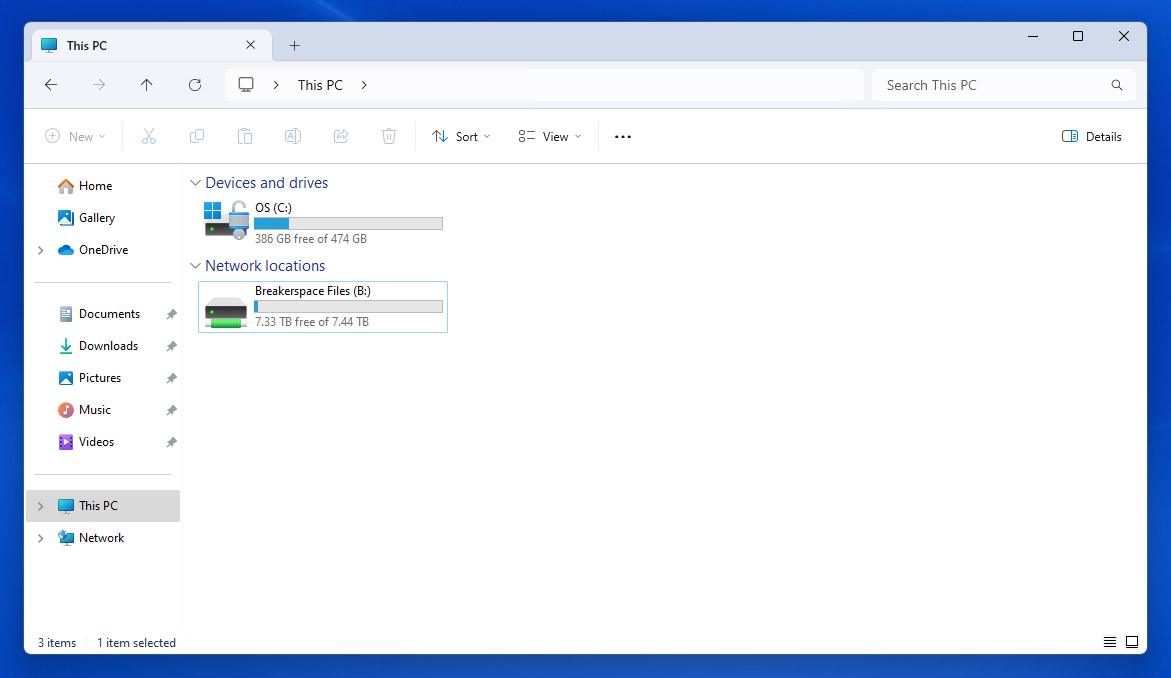
When you log in to a Breakerspace workstation, you should see a shared network drive in “My Computer” called “Breakerspace Files”, usually mapped to drive letter I:. See a screenshot of the Breakerspace Files drive if you are not sure what it looks like.
The shared drive is hosted on a file server in the Breakerspace and is also the Dropbox Team folder for the “DMSE Breakerspace” Dropbox Team. Files saved here are accessible to other users logged in to Breakerspace workstations and to members of the Dropbox Team. Do not use this shared folder for private or sensitive files.
Periodically, the file server reboots and Dropbox may not sync until an administrator logs in to the server and the Dropbox app runs. If you saved files to Breakerspace Files and they do not appear in the DMSE Breakerspace Dropbox Team folder, contact dmse-breakerspace@mit.edu.
The online Breakerspace onboarding record introduces this process before your first instrument training. A trainer can help you work through account enrollment or the membership request when needed, but the request must be made from your own MIT Dropbox account.
You may use other appropriate ways to manage and transfer your data, such as a thumb drive, external hard drive, or non-Team Dropbox folder in your own account.
Recommended shared-drive locations:
Breakerspace Files (I:)\_USERS\your-folder
Breakerspace Files (I:)\courses\subject_folder\your-folder
If the shared folder becomes untidy or confusing, Breakerspace staff may reorganize files as needed to improve usability.
Project And Method Support
Already-trained users can ask for help when a project involves an unusual sample, a more demanding preparation or measurement, an unfamiliar accessory, method development, data interpretation, or uncertainty about which instrument can answer the question.
- Ask a Breakerspace staff member in the lab, if someone is available.
- If no one is available, ask in
#breakerspace-helpon Slack or email dmse-breakerspace@mit.edu, whichever you prefer. - Briefly describe the sample, what you are trying to learn, the instrument or method you are considering, anything unusual about the material, and what you have already tried.
The Breakerspace team can help identify a feasible approach, review sample compatibility, develop additional instrument skills, and decide whether the work requires more preparation or training. Ask before bringing an unusual or uncertain sample into the lab; see Samples And Materials for the kinds of samples that require advance discussion.
If you have not yet trained on the relevant instrument, begin with Get Trained. Staff consultations are not currently booked through the instrument reservation calendar; contact the team directly.
Contact The Team
In The Lab
For an instrument problem, sample question, or quick operating decision, ask a Breakerspace staff member in the lab when someone is available.
Slack
The Breakerspace Slack workspace is mit-dmse-breakerspace.slack.com. Use #breakerspace-help for questions, tips, results, and issues that may benefit other lab users. The workspace also connects users with DMSE faculty, instructors, staff, and students.
Email dmse-breakerspace@mit.edu for access corrections, invitation problems, administrative questions, or support that does not require an immediate response.
For an urgent emergency, use the Breakerspace emergency instructions rather than Slack or email.